29 January 2026
Life is too extraordinary to be taken seriously.
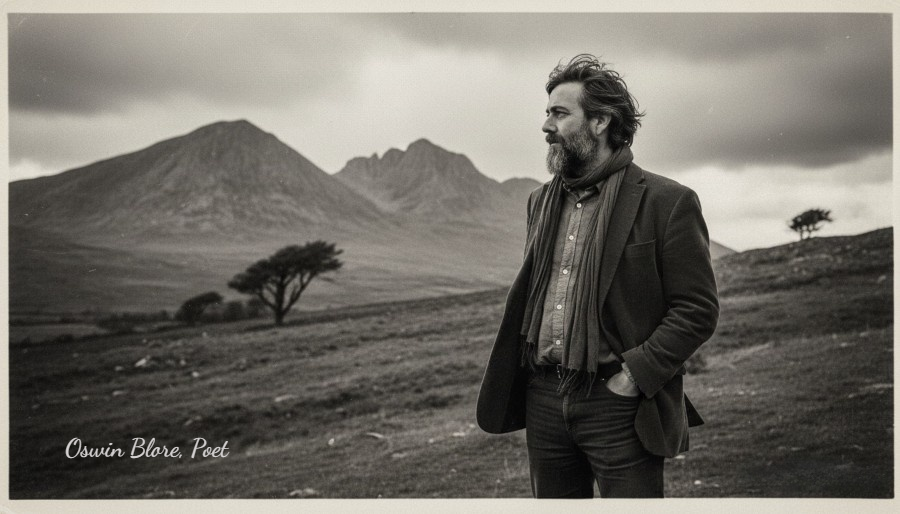
My name is Oswin Blore. My bric-à-brac shop stands next to the small cemetery along Silver Weir Lane in Durham. The shelves sag beneath the legacy of ordinary lives: Well-read books, posh porcelain, old clocks, toys, forgotten curiosities. Some of my stock has been bequeathed by those who now lay hidden in the cemetery. Maybe it’s their way of staying close to the objects they love, the objects that have become the skin and bone of their stories.
My notebooks are no longer enough. This diary came to me last summer. I remember the day clearly. There had been clouds and light rain all morning. Just before lunchtime, small pools of blue began to appear in the grey skyscape. I was busy waiting for customers. An old man who looked like God, parked his Morris Minor Traveller in front of the shop. I had just started eating my packed lunch – cheese and pickle sandwich, fruit scone with butter and a flask of tea.
The old man came in, looked around and then asked the way to the cathedral. “That scone looks nice,” he said. I offered him half. He nodded his head as he took the scone from my hand. “It’s all about stuff isn’t it,” he said, just before pushing the entire half-scone into his mouth.
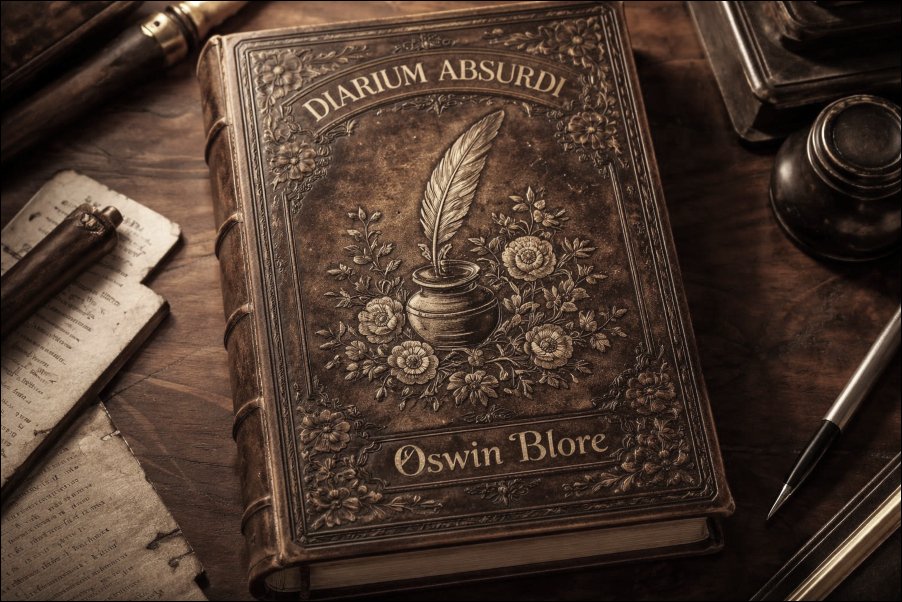
Before leaving the shop, the old man gave me a book. “Here, take this, it’s a diary. Write in it when you can. Whatever you write in it, I’ll be able to read. It’ll keep me up-to-date with what’s going on in your part of the world.” He left the shop chuckling.
I forgot about the book for about six months, until the day after Christmas. I woke up with a pen in my hand – a wooden pen that was given to me by a friend. I think my body was telling me to get on with it.
“To write in a diary is to collaborate with objects. The pen, the paper, the chair beside the window, the passing afternoon – all take part in the disclosure. The writer imagines he is describing the world, but in truth the world is slowly describing itself through him.”
— Albrecht Kettering, Logontology and the Grammar of Things.
That afternoon I came across this quote. So, from today, I shall begin a new writing adventure in a diary given to me by a man who looked like God. The Diarium Absurdi – I’m not quite sure what to make of it.
30 January 2026
I don’t know who you are, but I am glad you’re here.

3 February 2026
I’m sleeping badly at the moment. I dreamt I was trying to pull someone out of a deep, muddy hole. I’ve always scribbled in notebooks but I’ve never kept a diary. I’m going to change that. Why? I feel I live increasingly on the surface of things – I barely touch reality. I’m far too immersed in the human narrative, which is becoming increasingly materialistic. I’m now committed to re-engaging with my imagination and to embracing the natural as I used to. The power of words is that they can show us the way back. A diary is a path back into ourselves. Something is moving in that deep, muddy hole, and I think it belongs to me. This diary will be my way of pulling it out.
I don’t pretend to understand much of what I’ve read in The Journal of Speculative Chronophysics. But it does help me to get to sleep. I’ve tried counting sheep, playing mental scrabble and knitting, but nothing gets me to sleep better than a bit of abstract theory.
“Our insistence on experiencing time as a continuous whole is anthropocentric. There is growing evidence that block-time is sliceable, and, under the right metabolic conditions, digestible.”
– Professor Calderón Finch
The quote above is particularly interesting. I wonder what would happen to time if it really was digested? It would be fascinating to find out.
4 February 2026
My third wife got me the curtains that hang in my bedroom. They were in the loft for years and would have stayed there. But the day before yesterday, when I went round to clean the gold-fish pond, my only post-divorce responsibility, she told me that she wanted me to move back in with her. We divorced after I painted the front door pink. “Do you remember our cheese-on-toast soirées?” she said as I was leaving.
8:30am
There’s mist on the hills. The clock’s tick tends to be more clunky when it’s damp outside. It’s tock seems unaffected. It’s a very old timepiece and has arthritis in its hands. It’s pendulum has problems too. It has to have three drops of steroids administered to its swinging mechanism every month. I hide the steroids in WD-40 so the clock’s none the wiser.
February isn’t my favourite month.
Yesterday I went to the dentist. He was taller than I expected. He had an Irish accent and was playing Beethoven’s Pastoral Symphony on an old record-player as he scraped bits of calcified plaque from between my teeth. He drew blood. I could taste it. I could hear trains rumbling over the viaduct that passes just above the dentist’s extensive premises.
There’s a new Tesco hypermarket opposite with a carpark, carwash and a collection of recycling bins. It’s quite a busy corner of Durham. Nowadays, I only ever go to Durham for the dentist. I used to visit the city to walk along the river and eat carrot cake in the coffee shop on Elvet Bridge.
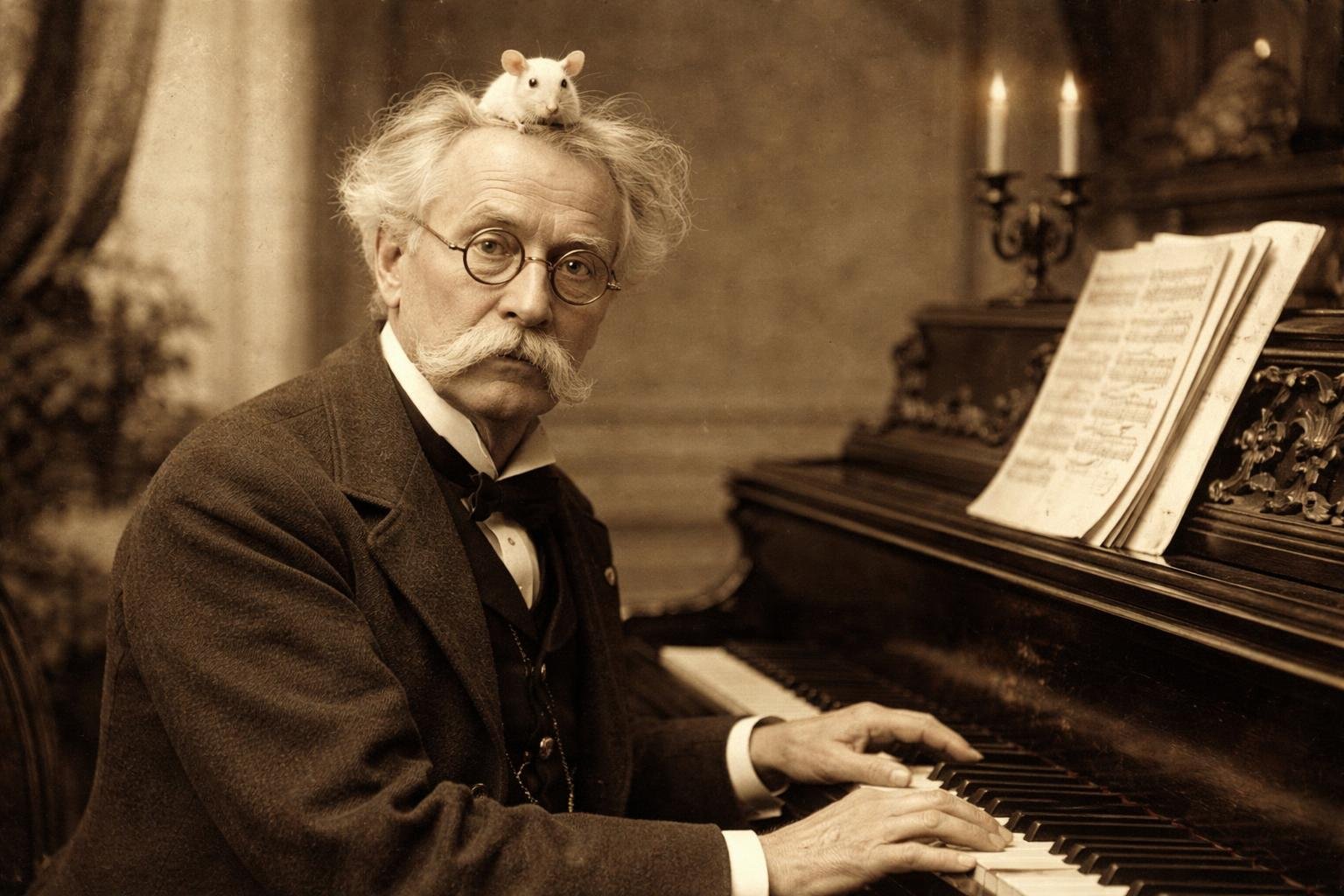
“I’m Seánóg,” the dentist said, just moments before he invited me to sit in his leather lounger and began tutting at my teeth. “Your teeth are older than you, by about ten years,” he said. He looked up at his assistant. A woman with naturally grey hair and a slightly crooked nose. “We’ll need to keep a close eye on his premolars.”
The woman wrote something down on a scrap of paper. “The computer’s still not working,” she moaned. She placed a piece of pink gum in her mouth and then smiled at me. It was a nice smile. Her teeth looked quite young. “It’s alright,” she said, winking at me. “I never forget anything. I’ve got an elephant’s brain. Isn’t that right Dr Delaney.”
Dr Delaney rolled his eyes. “Your skull’s not big enough for an elephant’s brain. The pachyderms’ encephalon is three to six times larger than a human’s and a lot heavier.”
I was unable to comment as three of the dentist’s fingers and some sort of implement, were in my mouth. I was beginning to salivate and began to worry about drowning. Can you drown on your own saliva? I didn’t want to swallow for fear of biting one of Dr Delaney’s fingers off.
The oral ordeal ended at about the same time the record-player finished playing the last movement of Beethoven’s symphony. I’ve always loved Beethoven. I love classical music. I was pleased to get Dr Delaney’s fingers out of my mouth.
At one point I remember asking what had happened to my usual dentist, Mrs Ditheridge. “She has eleven whippets,” Dr Delaney replied. I’m not sure how that answered my question but the dentist said nothing more on the matter and the assistant just shook her head and mumbled something like, “I can only afford three.”
On the way home I stopped on Waldridge Fell and watched several grouse roaming amongst the heather as if they were looking for something. I kept the car’s engine running. A passing hiker stared at me angrily and then tripped on a stick. This startled the grouse making them fly away in three different directions. The hiker began swearing at the stick. He picked it up and threw it. Due to its curved shape, it returned to him like a boomerang and hit him on the head. I wasn’t really paying attention to the hiker’s misadventure as I was busy trying to remember cheese-on-toast soirées with Harriet, my third wife.
I had pizza and chips for tea. With some marrowfat peas.

I struggled to sleep again. I dreamt the dentist was a famous pianist. He was performing at the London Palladium in front of the King and an audience of attractive women of varying ages. A grouse suddenly appeared out of the piano and woke me up. Harriet’s curtains have always been able to induce dreams. Once I dreamt they were magic carpets. They flew myself and Harriet to Sinbad’s cave. The tea he served was disappointing. I remember that.
5 February 2026
I only needed to read three pages of The Journal of Speculative Chronophysics, before falling into a deep sleep. I found the journal down the left leg of my pyjamas this morning. It had torn them quite badly. Maybe Harriet will repair them for me?
I circled this quote before dozing off:
When translated into the auditory domain, superstring harmonics exhibit patterns analogous to late-period Satie.
– Professor Helena Quince.
Bonum Diem
Should I buy new pyjamas? I’m going to phone the ticksmith this morning as I’m growing increasingly concerned about the clock’s arthritis. It may need a higher dose of painkillers. The shop’s ceiling needs repainting too. The worst job of all. I hate painting ceilings – nothing messier. I’ll go with white again.
Talking of white, it was snowing when I pulled the curtains open this morning. I saw Edwina Sponge pushing a pram full of logs along the road. She waved and shouted. “I’m off to the doctors today, for a blood test, and then I’m making cherry tart, come round later, I need help with my emails.” I’ve become her computer technician. I don’t mind. She has a Chameleon called Heraclitus. It likes to sit on my shoulder whenever I’m round sorting out her technology.
2:45pm
I want to be happy again. The kind of happiness that comes from inside and not the kind that comes from purchasing something exciting. I fear the rising darkness in our world. We are, most of us, mere footnotes in the great and voluminous BOOK OF LIFE. And yet those of us at the bottom of the human pile, often bare the heaviest burdens.
Mr Taylor, the ticksmith, broke a saucer. He appears to be clumsy with big things but incredibly skilled with small, delicate horological mechanisms. He prescribed a higher dose of steroids and a little morphine for the clock’s ‘sweeping hand.’ He said not to worry about the clock becoming addicted to morphine as it’ll only make for a more chirpy tick-tocking. He also talked about eventual amputation but that doesn’t bear thinking about.
I haven’t been over to the shop for days. The nineteen mile journey can be exhausting when done every day. Anyway, sometimes it is good to take a break from standing at the edge of expectation. I sometimes feel like the manager of an orphanage waiting to sell his children. It is an odd thought.
The snow has turned to rain and is falling quite heavily now. I’m drinking Pinot Grigio before going round to Edwina’s house. I might translate another chapter of The Flower tonight. Edwina will want me to take her to the What-Is-It Fair in Blanchland this weekend. Also known as the Odds & Oddities Emporium. It’s just a market aimed at people who don’t do markets – sellers that is. The poster says it’s a market ‘for things you’ve never quite known what to do with.’ It encourages people to search their lofts and cupboards for that bit of ‘unwanted treasure.’ I was thinking of selling the Mug You Can’t Throw Away. It was a gift from Harriet. It really is getting tiresome. Quite how it works I don’t know, but if you put it in the bin, bury it in the garden, throw it from the car at 70mph, (I’ve tried all those things), it manages to be back in the cupboard the next time you go to make yourself a cup of tea or coffee. I’m hoping that selling it will transfer ownership to another person.
8:15pm
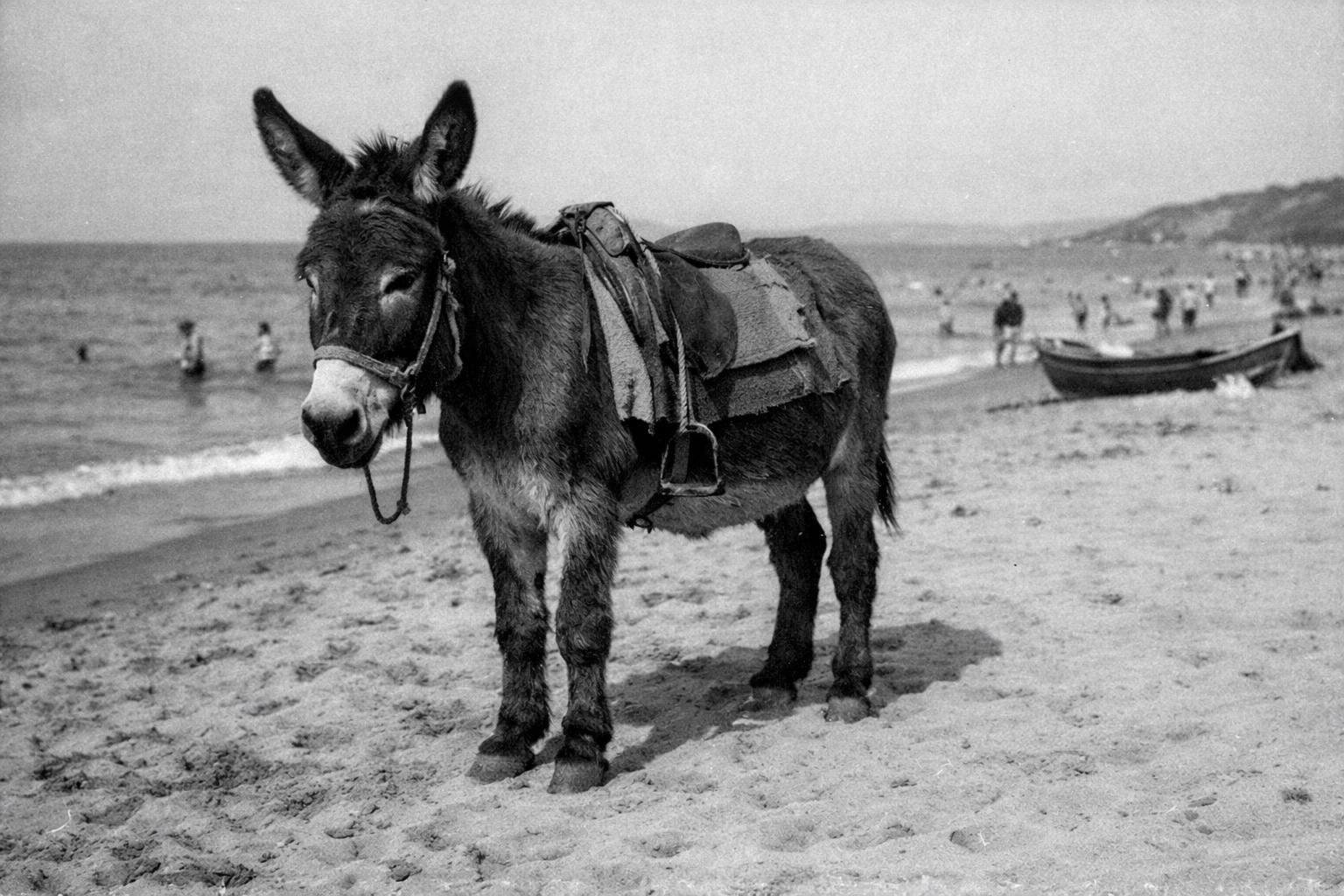
Edwina Sponge has permed her hair – or at least, her daughter Tansy did. She’s been getting a lot of spam in her inbox recently. Spam is quite difficult to clean up. It gets everywhere if mishandled. She also had problems with her webcam. It connects to random people for no reason. The other day Edwina found herself talking to a Portuguese lady who had just moved to Helsinki. The lady thought she was connecting to her Finnish tutor. Apparently they had a good chat. It turns out they’re both related. One of Edwina’s great-aunt’s of many years ago, travelled to Barcelona and fell in love with a goatherder. The child of the couple became a maid for the Portuguese lady’s wealthy parents. Quite by chance, the maid met a handsome boy at a dance which turned out to be the nephew of the wealthy father – who disowned his nephew at this point. It turns out the nephew, Álvaro Bennett, was a relative of the Portuguese lady. By this point I had lost the thread of what Edwina was saying and Heraclitus was biting my ear. I do remember Edwina telling me that Álvaro died falling off a donkey.
I’ve ordered some new pyjamas. They’re a green, checkered pattern with an embroidered duck-in-a-pond on the top pocket. I’m not sure why anyone would want a pocket on their pyjama top, but I suppose it might come in useful. It seems I will be going to the What-Is-It Fair. She bribed me with her cherry tart. Edwina has several things to sell but I was in a hurry to leave her house, so I never got to hear what.
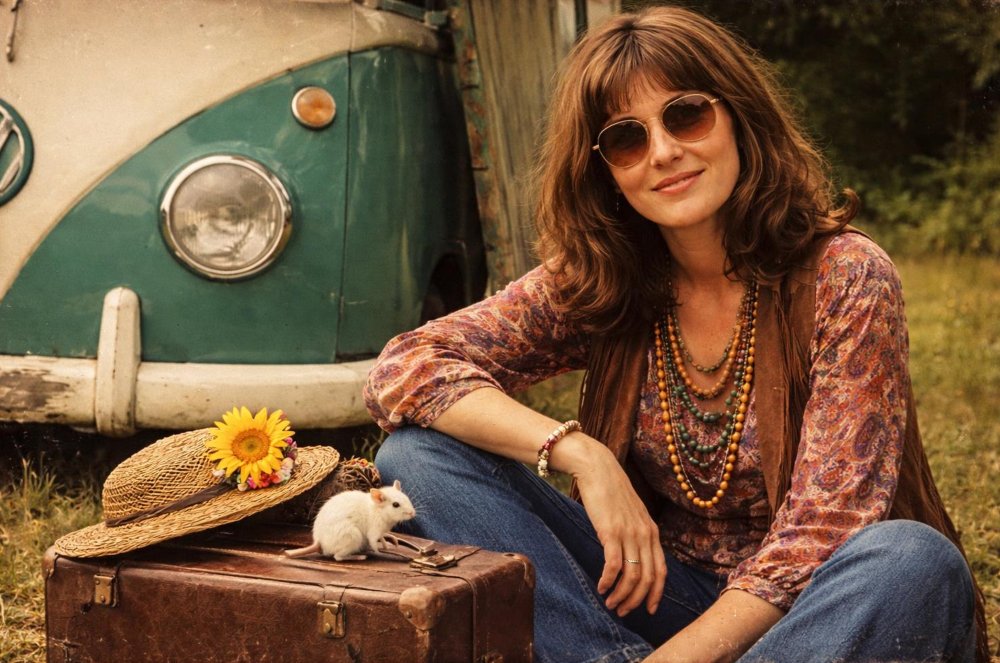
I’ve been going through a box of photos my mum gave me some time ago. Some of the photos are quite old. I think they’re worth keeping though. From what I’ve read in The Journal of Speculative Chronophysics, the invention of the time-machine isn’t that far away.
9 February 2026
Monday morning. I’ve had a mixed weekend.
The What-Is-It Fair was interesting. A lot of sellers had driven up from the South of England and had brought with them an array of interesting items, stuff that you rarely see up here in the North East. I had a good amount of cash with me thanks to having found a purchaser for the those bottles of nettle-sting wine I produced two years ago. Percy Preece lives in Stanhope and has always praised my wine making skills and has frequently told me that he’ll buy any excess stock I have.
Edwina was ecstatic all day long. As soon as we arrived at the fair, she informed me that she’d meet me “back in the car park” in three hours, not giving me any chance to negotiate an alternative time or place. She disappeared quickly into the crowd, almost dancing as she walked. I only bumped into her a few times. Once when she was eating a cream bun, once when she was talking to Dr Shadows and a last time when she had her foot stuck in a bucket. I didn’t stop to ask her how that happened. She did tell me on the way home but I won’t repeat it as it was quite uninteresting.
“Si vis amari, ama.” – Ovid, Amores
So, what did I purchase with my nettle-sting money? Before I tell you, I just want to quickly celebrate the selling of the Mug You Can’t Throw Away. The purchaser signed the receipt to say that he was taking ownership of the accursed cup. I’m hoping this will be enough to keep it from reappearing back in my tea-cupboard.
Before I continue I want to tell you some good news. As I passed Edwina and Dr Shadows, I overheard them discussing the reopening of Plughole Seminary. I thought I must have misheard and checked with Edwina as we drove home. I had not misheard. The old academy reopened its doors to students last September. For the moment they only have two students but are hoping that with the March intake, the old lecture halls will begin to fill again. More importantly, they’re going to start some evening classes for the general public. Edwina wasn’t clear about when the classes would start. Most of them sounded remarkably uninteresting, except one. Dry Stone Walling within Fae Jurisdiction, (if Edwina got the name right), sounds like a course I could engage with. I will need to investigate this matter more.
My main purchase is being delivered this afternoon. I also bought a very old Swiss cuckoo clock, a pair of winter socks, seven jars of homemade lemon curd and a poem detector. I tasted a sample of the curd and it was absolutely delicious. “That’ll be nice on my homemade bread,” Edwina said on the way home. I had to agree. I think she expects me to go round in a few days’ time with a jar. “I’ll telephone you when I’ve done some baking,” she said, as I dropped her off.
Saturday was full of rain and heavy cloud with only a very brief moment of sunshine. I need to get out in the garden and do some pruning before spring lands and the sap begins to rise. Last year I forgot and had to suffer the sight of overgrown bushes all summer long. The bees were happy though. The bushier bushes led to an over-production of flowers. A lot more honey was made, I’m sure.
Sunday
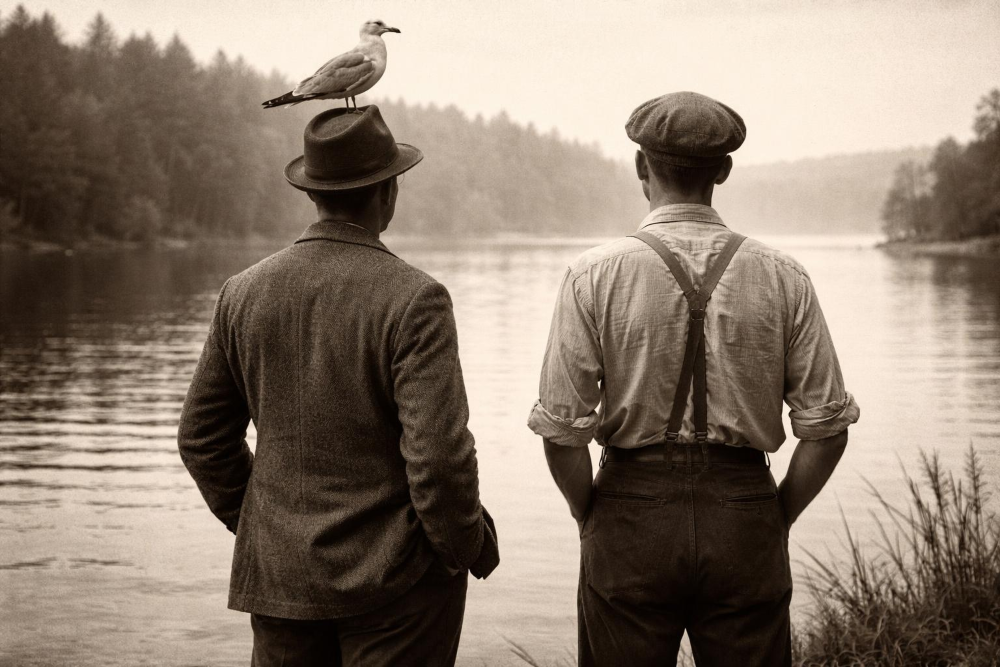
The over-excitement of Saturday led to a quiet, contemplative Sunday. I took the car for a drive and ended up at the Derwent Reservoir – a rather beautiful lake a little bit beyond Blanchland. There were several large flocks of geese chanting like Buddhist monks, filling the natural calmness with a most wonderful and spiritual sound. The lake also attracts a good number of fishermen who were standing like reeds at the waterside looking out at their lines in perfect postures of deep meditation. I took my notebook and wrote a few thoughts down.
I love this place. Sometimes you just have to sit some-where that isn’t your usual where. A place that says things in different ways. Trees that have composed a different kind of music. A fence that disappears into lake water. Long, dead grass that’s waving its tall, thin fingers, composing poems in the air. Five sheep are grazing, they’re parked like ornaments on a grassy mantlepiece. Oh, to be in this February spirit, this hopeful spirit, looking forward to spring but not letting go of this driftwood afternoon in winter.
Rain. Quite heavy. What a miracle that everything fits so neatly together. Everything has its reason, its purpose. From the scribbling grass and musical trees, to the rain and my pen and the thoughts that flow through my ink onto the awaiting page.
Sunday night I read some of Ovid’s poetry and thought about love. After four wives I now find myself on my own. Did I do something wrong? The clock has managed to put up with me all these years. I can’t be blamed for its arthritis. I’ve put a jar of lemon curd aside for when Edwina phones. I love freshly-baked bread.
I will now go and paint the shop’s ceiling. I’m hoping to get the first coat finished before the delivery of my main purchase from the fair. I won’t tell you what it is yet. I’m excited but also very apprehensive. I’m not sure where I’m going to keep it. It has spent the last fifteen years in its present owner’s understairs cupboard. I wonder what Harriet will think of it?
12 February 2026
My bric-a-brac shop is called: The Footnote. I’ve been sorting out some of the many books I have for sale. I need to make room for eleven ceramic lamps, three framed mirrors, a carriage clock, and a collection of paperweights. These are all coming from Mr Bright the cowman at Bridge Farm.
I paid him £100 for the lot.
The quote below was taken from Dr Vane’s book: Logontology and the Threshold of Disclosure: Beckett and the Metaphysics of Waiting (1974). It’s one of five volumes of his work we have in the shop. For some reason I had annotated the page and circled the quote with a pencil.
“Beckett was not a philosopher of nothingness, as is so often claimed. His figures do not wait for events but for disclosure itself. Waiting, in Beckett, is the ontological threshold – the place where beings gather before they are permitted to mean something.”
– Dr Elias Vane. Logontology and the Threshold of Disclosure: Beckett and the Metaphysics of Waiting.
Wini, my assistant, calls the shop The Waiting Room. She’s a kind of Godot groupie. She must have seen the play at least a hundred times. Unlike Vladimir and Estragon, the characters in my shop have no choice but to stay and wait for Godot – Godot being the customer who’s going to give them a second life.
On my way to the shop I saw Mrs Viola standing in front of the church looking up at the For Sale sign. I think she might have been quietly crying. The church is where she was christened. It’s where she got married. It’s where her children took their first communion. It’s where she said goodbye to her husband.

Wini had already opened the shop. Winifred Finch has been my assistant for over three years and is very good with the shop’s congregation of objects. I’ve never found such sensitivity in anyone so young – she’s 23. I finished the ceiling yesterday. Only one item, a paper goldfish with a torn tail, was damaged. Wini placed it in the ‘graveyard’ we have in the garden at the back of the shop.
I took delivery of my main What-Is-It Fair purchase on Monday afternoon. He arrived at my house in a large cardboard box. It took three people to carry him in. “Put him in the living-room,” I said. That was a mistake. He’d go better in the spare bedroom, but I can’t move him on my own, let alone carry him upstairs.
Monty Pegler was stuffed by Hargreaves & Daughter, Natural Preservationists, in 1859. Apparently they specialised in rare birds, foxes and domestic pets, and had an office in London, where Monty was killed by a runaway Hansom Cab. They agreed to turn their taxidermist skills to preserving Monty Pegler as payment of a large gambling debt accrued by Mr Hargreaves.
Monty came dressed in his favourite costume. These can be removed, washed, repaired and/or replaced – if necessary.
He was wearing:
- A black frock coat.
- A dark green waistcoat.
- A very white shirt.
- A grey silk cravat.
- Charcoal coloured wool trousers.
- Black leather shoes.
- A gold watch (chained to his waistcoat pocket).
The Victorian gent came with instructions and a large wooden box of paperwork. His last request was that the paperwork should ‘always be kept with me. For without them, I shall not be known.’
In the box there are:
- Ledger books.
- Notebooks.
- Letters.
- Bills and receipts.
- Calling cards.
- Investment papers.
- Insurance documents.
- His will.
Wini said I was taking my love of abandoned objects too far when I introduced her to Monty. Harriet screamed and ran out of the house. Edwina cried and said she had seen him at the fair and had considered giving him a home but the price tag had put her off.
14 February 2026
I forgot it was Valentine’s day. I invited Wini over for Christmas pudding. I made four in December and had one left over. I put a candle on the table – I don’t know why. I served the pudding with Madeira Sherry. I joked, “well, this is romantic.” I think it would have been okay had I not winked. She stood up and blew the candle out. “The pudding was nice,” she said, as she hurriedly put on her coat. She took one last look at Monty. “You have a kind soul,” she said to me as she left. She smiled and shook her head as she got into her dad’s old Ford Capri. She waved as she drove away.
16 February 2026
My good friend Barry, now long-deceased, introduced me to the art of Welsh Rarebit one sunny afternoon. I was just nineteen years old. I remember the old gas cooker with its grill above the stove. I remember the warmth of the sun on my back as I leant against the windowsill watching the artist transform a bit of cheese, some mustard powder, ale, Worchester sauce, and, of course, homemade bread, into something unimaginably tasty. We used to talk philosophy, poetry and religion most evenings – until the sun set.
Time is so unkind.
The bric-a-brac I have in my shop are the scars of our living. I have several souvenirs from my friendship with Barry waiting for new soil, waiting to be planted in someone else’s imagination.
“Man does not live inside the world as he believes. He lives inside his imagination of the world. This is not a deficiency, but a grace. For it is only within imagination that the world becomes capable of meaning.”
– Dr Elias Vane, The Interior Ground: Essays in Logontological Method (1971)
17 February 2026
Mr Taylor, the Ticksmith, has asked to see me next week. I’m worried he has some bad news about the clock. He’ll have the results of the tests he carried out last week. Edwina invited me round to share freshly baked bread. I took the lemon-curd. We had a chat about electricity, birthdays and the art of pickles. Edwina is addicted to conversation.
The mug has never reappeared.
19 February 2026
A woodpigeon called me to attention this morning. I returned to the shed where I do most of my writing, placed Einaudi on the turntable, and woke my imagination. I’ve seen several oyster-catchers recently, a curlew in mid-flight and a snipe. I’ve heard the haunting song of the lapwing but I’ve not seen any yet. It’s nearly spring and the waders are arriving to nest. This is wonderful. It’s a joy every spring when the song of the coast comes inland. I’ve also seen two starlings.
As an owner of a bric-a-brac shop, my life is ‘all about stuff.’ (As the man who looked like God pointed out). I’ve always believed that ‘things’ exist for a purpose. Understanding how things work is not the point, it is the meaning-of-things that is important. If we don’t understand the ‘why’ we will never understand the ‘how.’ That’s a thought worth holding on to. Embrace the why of things I feel like shouting. How can we be so stupid?
Ruth, my first wife, gave me a notebook in 1998, on the day of our divorce. She glued a photo of herself onto the cover. I keep the notebook in my sock drawer and use it for my deeper thoughts. Not that I have many of those at the moment. I sometimes take it to the shop. If I’m going to do any profound thinking, it’ll be in The Footnote and not the shed.
The other day a book dropped from the bookshelf in the shop. As I lifted it from the floor it fell open to a page discussing the relationship between keeping diaries and logontology – my preferred philosophy of disclosure.
Here’s a quote from the page:
“Among all the objects that accompany a human life, the diary is unique in that it does not merely exist in the world – it exists toward the world. A chair supports the body; a clock measures duration; but a diary receives disclosure. It is the one object deliberately fashioned to welcome the unfinished. Each entry is not a record of meaning already formed, but a threshold at which meaning first becomes visible. The diary does not contain the self. Rather, the self gathers there, slowly, through repeated acts of attention. In this sense, the diary is not a passive artefact of culture, but an active partner in human becoming. It is society’s quietest institution: a place where reality is allowed to arrive in its most intimate form.”
— Dr Marianne Ellwood, Society and the Intimate Object: A Logontological Sociology of Everyday Life (1998)
I have a feeling this Diarium Absurdi is going to become a companion in a way my notebooks have not. The diary came to me last summer in a quite extraordinary manner. I think this is going to be that start of the adventure I’ve been looking for.
20 February 2026
Friday. The winter socks I purchased at the What-Is-It Fair, are far too good for my sensitive feet so I’m going to put them in the shop. I’m sure someone with less sensitive feet than mine will find them useful. Harriet said she’d make them into sock-puppets and donate them to a care home. Maybe that’s a better idea.